

Come and meet us
PE, PSHE and Wellbeing
Building healthy bodies, confident relationships and the knowledge to make safe, responsible choices.
Physical Education, PSHE and wellbeing help children understand themselves, work with others and take increasing responsibility for healthy, safe and fulfilling lives. Teaching combines knowledge, repeated practice, reflection and real opportunities to participate.
These subjects support the whole child while remaining carefully planned areas of the curriculum with clear progression and expectations.
PE
Physical Education
At High Ercall we create confident, resilient and physically literate learners who embrace an active lifestyle through our 5Rs every day.
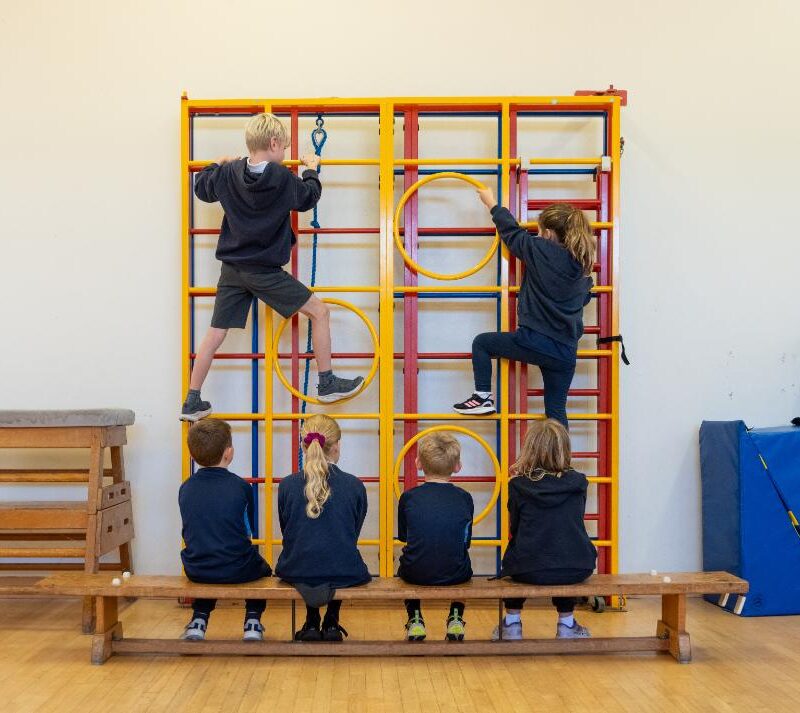
Our children receive at least two hours of PE each week. The Complete PE scheme supports a progressive sequence in which pupils develop movement, coordination, tactics, teamwork and understanding across a broad range of activities.
Lessons, swimming, clubs and competition help children become physically confident and find activities they enjoy for active lives. The school uses funding and partnerships to broaden experiences, develop staff expertise and encourage participation beyond timetabled lessons.
PE days:
C1 – Monday and Tuesday (with outdoor learning clothes for Monday sessions)
C2 – Monday and Tuesday
C3 – Monday and Friday
C4 – Wednesday and Thursday
C5 – Wednesday and Thursday
PSHE

PSHE and Relationships and Health Education
PSHE teaches the knowledge and skills children need for relationships, health and wellbeing, and living in the wider world. Twinkl Life’s PSHE and Citizenship resources support a programme aligned with the PSHE Association themes and statutory Relationships and Health Education.
Pupils learn about friendships, families, respect, boundaries, emotions, physical and mental health, online behaviour, money, community and change. Sensitive content is taught in an age-appropriate way using agreed policy and curriculum plans.
View PSHE Curriculum
What does PSHE look like at High Ercall Primary School?
At High Ercall Primary School, Personal, Social, Health and Economic (PSHE) Education, including statutory Relationships Education and Health Education, plays a central role in preparing pupils for life in modern Britain. Our curriculum is carefully designed to support pupils’ personal development, wellbeing, safety and character, enabling them to thrive both now and in the future.
Rooted in our school values and key drivers, our PSHE curriculum provides children with the knowledge, skills and attributes they need to develop healthy relationships, make informed decisions, stay safe and contribute positively to society. Through a progressive programme of learning, children are taught to understand themselves, respect others and recognise the importance of kindness, responsibility and empathy.
We recognise that children are growing up in an increasingly complex and rapidly changing world. Therefore, our curriculum equips pupils with age-appropriate knowledge about friendships, family relationships, physical and mental health, online safety, personal boundaries and the changing body. Through protective safeguarding education, pupils learn how to recognise risks, seek support when needed and understand that they have a right to feel safe, valued and respected.
Our PSHE curriculum promotes positive self-worth and helps children develop resilience, confidence and emotional literacy. We aim to foster a strong sense of belonging where every child understands their value within the school community and wider society. Through discussion, reflection and real-life contexts, pupils learn to appreciate diversity, respect differences and develop the skills needed to build successful relationships throughout their lives.
By the end of their primary education, we aim for every child to:
- Develop a secure body of substantive knowledge about health, wellbeing, relationships, personal safety, citizenship, finances and the wider world.
- Develop disciplinary knowledge by applying what they know to make informed choices, solve problems, manage emotions, build positive relationships and respond appropriately to new situations and challenges.
- Become increasingly reflective learners who can evaluate decisions, consider consequences and understand how their actions affect themselves and others.
- Know how to seek help, access trusted sources of support and recognise when something does not feel safe or right.
- Build the confidence, resilience and independence required for successful transition into secondary education and beyond.
- Our PSHE curriculum is supported by the Twinkl Life PSHE and Citizenship scheme, which is fully aligned with the PSHE Association Programme of Study and meets the statutory requirements for Relationships Education and Health Education.
The curriculum also reflects our commitment to developing the whole child. Opportunities are provided for children to discuss, debate, collaborate, problem-solve and reflect upon real-life situations. Through this approach, pupils develop not only knowledge and understanding but also the confidence and character needed to navigate life safely, respectfully and responsibly.
Our 5Rs are woven throughout the PSHE curriculum and closely linked to our school drivers. Children are encouraged to demonstrate resilience when facing challenges, respect for themselves and others, responsibility for their actions and reflective thinking when making decisions. Units such as Aiming High, Diverse Britain and TEAM provide meaningful opportunities for pupils to develop teamwork, leadership, resilience and an appreciation of the diverse world in which they live.
Ultimately, our intention is to provide every child with a high-quality PSHE education that promotes wellbeing, strengthens safeguarding and develops the knowledge, skills and values needed to become confident, responsible and compassionate members of society.
How is the PSHE curriculum organised?
PSHE is taught through a carefully sequenced and progressive curriculum that enables children to build knowledge and skills over time. Learning is organised into thematic units that are revisited throughout Key Stage 1 and Key Stage 2, allowing pupils to recall prior learning, make meaningful connections and deepen their understanding as they mature. This spiral curriculum ensures that important concepts are explored in an age-appropriate way and revisited with increasing depth and complexity.
Each lesson begins by exploring pupils’ prior knowledge through discussing, ‘The Big Question’. This question reflects on the previous lesson’s learning and allows the children to retrieve, recap and revisit and prior learning. Lessons conclude with opportunities for reflection and consolidation so that children can consider their learning, make connections and apply new knowledge to real-life situations. Teachers use a wide range of engaging teaching approaches, including discussion, debate, role play, scenario-based learning, cooperative activities and problem-solving tasks, to encourage participation and develop critical thinking.
Whilst the curriculum is carefully planned to ensure progression, we recognise the importance of responding to the needs of our pupils. Therefore, content may be adapted or revisited throughout the year to address current issues, safeguarding priorities, emerging themes within school life or the specific needs of individual cohorts.
Learning is organised through the three core themes:
- Relationships
- Health and Wellbeing
- Living in the Wider World
Relationships
Through the Relationships strand, children learn how to develop and maintain healthy, respectful and positive relationships with family members, friends and members of the wider community. Pupils develop an understanding of kindness, empathy, respect, trust and inclusion, whilst also learning how to recognise unhealthy behaviours and seek support when needed.
Children are taught about friendships, family relationships, online relationships, personal boundaries and respectful behaviour. They learn that families and relationships may look different but are built on love, care and commitment. By the end of primary school, pupils understand the characteristics of healthy relationships, know how to stay safe both online and offline and feel confident seeking help and support when required.
Health and Wellbeing
The Health and Wellbeing strand equips children with the knowledge and skills needed to make informed choices about their physical, emotional and mental health. Pupils learn the importance of healthy lifestyles, emotional wellbeing, self-care and personal safety.
Children are taught how to stay safe in a range of situations, including online environments, public spaces and within their communities. They develop an understanding of personal boundaries, consent, trusted adults and safeguarding principles. Key safety messages are reinforced through programmes such as Crucial Crew and Loudmouth Productions.
Pupils also learn about emotional literacy, resilience, managing feelings and strategies for maintaining positive mental health. As they progress through school, children develop increasing confidence in recognising risk, making safe choices and seeking support when necessary.
Living in the Wider World
Through this strand, pupils develop an understanding of the diverse and interconnected world in which they live. They learn about their responsibilities as citizens, the importance of respecting others and the value of contributing positively to their communities.
Children explore diversity, equality, democracy, careers, aspirations, financial education and environmental responsibility. They develop an appreciation of different cultures, beliefs and experiences whilst learning to respect individual differences and challenge stereotypes. Through these learning experiences, pupils gain a secure understanding of their role within local, national and global communities.
Assessment in PSHE
Assessment is ongoing and formative. Opportunities to revisit prior learning are carefully planned to strengthen long-term memory and ensure children are able to know more and remember more. Each lesson begins with, ‘The Big Question’ which revisits the children’s prior learning from the previous lessons. This works as an accumulate approach and a bank of questions of build and then used for ‘Retrieval Quizzing’ throughout the year. Teachers use discussion, reflection activities and retrieval quizzing to identify misconceptions, assess knowledge retention and support pupils in building secure knowledge over time.
How do we teach Relationships and Sex Education (RSE)?
Relationships, Sex and Health Education is primarily delivered through three specific Sex Education lessons each year. Our provision reflects statutory guidance and supports children in developing the knowledge they need to stay safe, healthy and prepared for the changes they will experience as they grow.
We use the Twinkl Life scheme to support the teaching of age-appropriate Sex Education. In addition to this, we use the NSPCC Speak.Out.Stay.Safe programme and their PANTS campaign in the Autumn term. This programme helps pupils develop a positive understanding of themselves, their bodies and healthy relationships.
Teaching is carefully planned to ensure content is age-appropriate and sensitive to pupils’ developmental needs. Children are taught correct anatomical vocabulary, the functions of body systems and the importance of personal hygiene, self-respect and healthy relationships. In KS2, pupils learn about puberty and the physical and emotional changes associated with growing up.
Throughout these lessons, pupils are encouraged to ask questions, engage in discussion and understand that physical and emotional changes are a normal part of growing up. We aim to provide a supportive environment in which children feel confident, informed and reassured.
In Science, pupils also learn about growth, development and life cycles. In Key Stage 1, learning focuses on how humans grow and change and how to keep our bodies healthy and safe. In Key Stage 2, this learning develops further through the study of human development, reproduction and life processes as outlined in the National Curriculum.
Monitoring and Curriculum Development
The quality and impact of PSHE are monitored by the PSHE Subject Leader, Senior Leadership Team and Governors.
Monitoring activities include:
- Pupil voice interviews
- Learning walks and lesson observations
- Work scrutiny
- Curriculum reviews
- Planning scrutiny
- Discussions with staff and pupils
These activities help evaluate curriculum coverage, progression, pupil understanding and the quality of teaching and learning.
Governors play an active role in monitoring the curriculum and regularly engage with pupils to discuss their learning experiences. Attendance, behaviour, safeguarding and wellbeing data are also reviewed to help evaluate the effectiveness of the curriculum and inform future planning.
Supporting Pupils with SEND
At High Ercall Primary School, we believe that every child should have access to a high-quality PSHE education. All pupils participate fully in PSHE lessons through high-quality first teaching and inclusive classroom practice.
Where required, learning is adapted to meet individual needs whilst maintaining high expectations and ensuring that pupils access the same curriculum concepts as their peers. Adaptations may include:
- Adult support during discussions, role play and collaborative activities
- Carefully planned mixed-attainment groupings
- Scaffolded resources and visual supports
- Printed materials to aid understanding and independence
- Chunked instructions and additional processing time
- Adapted outcomes appropriate to individual learning needs
Provision for pupils with SEND is monitored by our SENDCo, Nicola Bane, who works closely with teachers and families to ensure children receive appropriate support and achieve success within the curriculum.
Impact
At High Ercall Primary School, PSHE education enables children to become confident, resilient and responsible individuals who are well prepared for life beyond primary school.
Pupils develop the vocabulary, knowledge and confidence to express their thoughts, feelings and opinions respectfully. They understand how to build positive relationships, value diversity and contribute positively to their school and wider community. Children know how to keep themselves physically and emotionally safe, recognise when they need support and identify trusted adults who can help them.
Our curriculum promotes positive mental health and wellbeing, helping pupils to develop emotional resilience, self-awareness and self-regulation. Through meaningful learning experiences, children learn how to make informed decisions, manage challenges and respond positively to change.
Successful PSHE education supports academic achievement by reducing barriers to learning, improving confidence and promoting positive attitudes towards school. It strengthens safeguarding outcomes, enhances pupils’ personal development and contributes significantly to their spiritual, moral, social and cultural development.
As a result, children leave High Ercall as respectful, knowledgeable and compassionate young people who possess the skills, understanding and confidence required to flourish in secondary education and as active members of modern society.
Wellbeing
Wellbeing and Emotional Literacy
Children learn to name emotions, recognise how feelings can affect behaviour and use strategies that support regulation and resilience. Resources including the Tina Rae toolbox and the school’s wider pastoral approach give pupils a shared language for asking for help and supporting one another.
Staff notice changes in wellbeing and work with families when additional support may be needed. Curriculum teaching is complemented by the family-support and safeguarding routes available elsewhere on the site.
