

Come and meet us
Art, Music and Languages
Creating, performing and communicating through images, sound and language.
Art, Music and Languages give children different ways to explore ideas, express themselves and understand culture. Pupils build practical knowledge and vocabulary, study the work of others and gain confidence through creating, performing, discussing and refining their own work.
Each subject is planned progressively within the school’s mixed-age structure, with opportunities to revisit important ideas and apply them in new contexts.
Art
Art and Design: looking, making and evaluating
Art teaching develops drawing, painting and sculpture alongside experience of other media, processes and digital tools. Children use sketchbooks to investigate, practise and develop ideas rather than treating every activity as a finished piece.
A two-year rolling programme draws on the AccessArt curriculum and introduces traditional, modern and contemporary artists from a diverse range of cultures, genders, styles and media. Pupils learn to observe closely, make informed choices and discuss their own work and the work of others.
View Art Curriculum

What does Art and Design look like at High Ercall?
At High Ercall Primary School, Art and Design is a valued part of every child’s cultural and creative education. We want pupils to become increasingly knowledgeable, skilful and thoughtful artists: able to observe closely, experiment purposefully, handle materials with growing control, learn from artists and makers, and make informed creative choices of their own.
Our curriculum is ambitious for all pupils and is carefully sequenced from EYFS to Year 6. It develops practical knowledge of materials, techniques and processes; theoretical knowledge of artists, artworks, traditions and contexts; and disciplinary knowledge about how art is made, interpreted, discussed and valued. These forms of knowledge work together so that pupils can create with greater confidence, independence and intention.
Our curriculum promotes the 5Rs—resilience, responsibility, reflection, respect and resourcefulness. Pupils learn that artistic practice involves looking carefully, practising, taking informed risks, responding to feedback, revising ideas and persisting when materials or techniques do not behave as expected.
Learning is enriched through high-quality books, gallery and museum experiences, local visits, artists and creative professionals, including opportunities in Shrewsbury, Telford and the wider Shropshire area.
Curriculum Intent
- Provide a broad, balanced, ambitious and inclusive Art and Design entitlement for every pupil;
- Meet and build beyond the National Curriculum expectations for drawing, painting, sculpture, other art/craft/design techniques, sketchbooks and knowledge of artists, makers, designers and architects;
- Develop practical fluency through carefully sequenced instruction, rehearsal and re-encounter with important techniques;
- Build rich theoretical knowledge of art across time, place, culture and practice, including traditional, modern and contemporary work;
- Develop disciplinary thinking so pupils can notice, compare, interpret, question, evaluate and justify artistic decisions;
- Teach precise subject vocabulary and enable pupils to use it when talking and writing about art;
- Use sketchbooks authentically to explore, practise, record, revisit and develop ideas;
- Develop creativity through secure subject knowledge rather than treating creativity as a generic skill;
- Ensure pupils know more, remember more and can apply more of the art curriculum over time;
- Prepare pupils for the next stage of art education and for lifelong participation in culture and creativity.
A carefully sequenced curriculum
Art is organised through a two-year rolling programme for each mixed-age class. AccessArt pathways provide the principal structure, mapped to the school’s long-term plan and progression documentation. Curriculum choices ensure sufficient depth in key areas of making and purposeful breadth across art, craft and design. Important knowledge is deliberately revisited in fresh but connected contexts.
- long-term curriculum plans;
- AccessArt pathway and medium-term planning;
- progression of practical, theoretical and disciplinary knowledge;
- vocabulary progression;
- artist and book maps;
- enhancement opportunities;
- sketchbooks and portfolio evidence;
- unit mind maps and retrieval walls.
Evidence-Informed Teaching
Teaching reflects the school’s wider Teaching and Learning approach while remaining subject-specific. Ofsted’s art research review emphasises that pupils need repeated practice, feedback, revisiting and effective modelling, and that different pedagogies are appropriate for practical, theoretical and disciplinary knowledge.
- clear explanation of what pupils are learning and why;
- teacher modelling and worked examples of techniques and processes;
- guided practice before independent application;
- deliberate practice of important components, especially when a technique is new;
- carefully managed cognitive load, including limiting unnecessary choices while pupils are novices;
- increasing independence, variation and open-ended application as expertise develops;
- carefully selected artist images, comparison and contextual explanation;
- frequent discussion, questioning and opportunities to justify artistic choices;
- timely, bite-sized feedback while pupils are making;
- responsive teaching when assessment identifies misconceptions or insecure techniques.
Practical, theoretical and disciplinary knowledge
Practical knowledge includes how to use tools, materials, techniques, processes and formal elements. Theoretical knowledge includes artists, makers, designers, artworks, traditions, contexts, materials and meaning. Disciplinary knowledge helps pupils participate in the conversations of art: considering intention, interpretation, purpose, value, quality and the different ways art can be understood. Teachers make explicit links between these domains so that knowledge of artists informs making, and making gives pupils richer ways to understand and discuss art.
Sketchbooks
Sketchbooks are working spaces, not exercise books. Pupils use them to observe, experiment, practise, annotate, collect ideas, respond to artists, test materials, revisit previous learning and reflect on choices. They provide one source of assessment evidence, but teachers also draw on observation, discussion and practical work.
Retrieval, remembering and assessment
The principal assessment change from September 2026 is a consistent mind-map and retrieval approach, aligned with the successful model used in other foundation subjects but adapted to the distinctive nature of Art and Design.
- At the start of each unit, the class creates a shared mind map.
- The mind map has three core branches: Skills/Techniques/Processes; Artists/Makers/Designers/Artworks; and Vocabulary/Formal Elements.
- As the unit develops, pupils and teachers add the essential knowledge that all pupils are expected to remember.
- Teachers create a small number of cumulative retrieval questions from this knowledge. These are displayed on an Art Retrieval Wall and revisited through brief, low-stakes quizzing during the unit and through spaced retrieval later.
- Quizzing is used where it is valid—for example to recall artists, vocabulary, processes, material properties, formal elements and sequences of technique.
- Practical knowledge is also assessed through observation of practice, sketchbook evidence, pupil explanation and in-the-moment dialogue and feedback.
- Disciplinary knowledge such as interpretation, meaning, purpose and aesthetic judgement is assessed through discussion, comparison and reasoned explanation rather than reduced to factual recall.
- Final pieces are one source of evidence, not the sole measure of attainment. Teachers consider what taught knowledge pupils have remembered and successfully applied.
This approach keeps assessment formative, proportionate and useful. It supports teachers to identify gaps, respond to misconceptions and strengthen long-term memory without creating unnecessary tracking or marking workload.
Artists, culture and representation
Pupils encounter a deliberately broad range of artists, craft makers, designers and architects. The curriculum includes Western and non-Western traditions, historic and contemporary practice and artists from diverse communities. Artists are taught in meaningful context—what they made, how and why they made it, the materials and processes they used, and connections to wider artistic traditions—rather than as isolated biographical facts.
Enrichment & Cultural Capital
- gallery and museum visits;
- artist, maker and designer workshops;
- local sketching and observational visits;
- family art events;
- creative-careers encounters;
- exhibitions and opportunities for pupils to curate and present work;
- links with Shrewsbury, Telford and wider Shropshire arts organisations where these deepen planned learning.
Enhancements are selected to strengthen curriculum learning and are prepared for through relevant prior knowledge so that pupils can make sense of what they encounter.
Early Years
In Reception, children build foundations through Expressive Arts and Design and Physical Development. They explore mark-making, paint, collage, print, textiles, clay and construction in continuous provision and adult-guided experiences. Adults model language, techniques and safe use of tools, encourage observation and conversation, and use high-quality books, images and objects to broaden children’s knowledge of artists and making.
Adaptive teaching and inclusion
We have high expectations for every learner. Pupils access the same ambitious curriculum wherever possible, with barriers removed through responsive, subject-specific adaptation.
- pre-teaching vocabulary and visual supports;
- explicit modelling and small-step instruction;
- additional guided practice and repetition;
- adapted tools, grips, surfaces, seating and sensory/environmental adjustments;
- scaffolds such as examples, prompts, word banks and sentence stems;
- alternative recording methods and assistive technology where appropriate;
- additional processing time and chunked instructions;
- carefully deployed adult support that promotes, rather than replaces, independence.
Impact
By the end of Year 6, we want pupils to be able to:
- recall and apply a growing repertoire of practical techniques and processes;
- use drawing, painting, sculpture and other media with increasing control, confidence and intention;
- use sketchbooks independently to observe, experiment, revisit and develop ideas;
- recognise and discuss a range of artists, craft makers, designers, architects, artworks and traditions;
- use increasingly precise art vocabulary;
- make connections between artists, materials, processes, contexts and their own work;
- explain and justify artistic choices and respond thoughtfully to the work of others;
- reflect on feedback, evaluate outcomes and refine work;
- approach creative problems with resilience, curiosity and resourcefulness;
- see galleries, museums and creative practice as spaces and experiences that belong to them.
Impact is evaluated through:
- ongoing formative assessment and responsive teaching;
- unit mind maps and retrieval-wall responses;
- pupil discussion and pupil voice;
- sketchbook and portfolio scrutiny;
- observation of practical techniques and processes;
- lesson visits and professional dialogue;
- review of curriculum coverage and progression;
- subject leader and governor monitoring;
- consideration of participation, access and outcomes for pupils with SEND, disadvantaged pupils and other groups.
Assessment information is used to identify strengths, revisit misconceptions and improve curriculum and teaching. Progress is understood as pupils learning and remembering more of the planned curriculum and becoming increasingly able to use that knowledge independently and purposefully.
Music
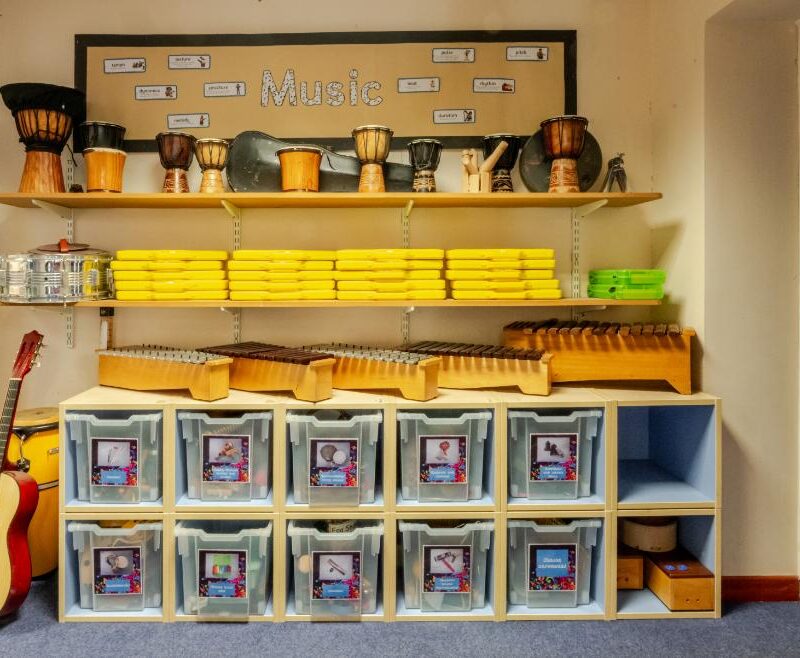
Music: listening, creating and performing
Music learning is organised around pulse, rhythm, pitch, tempo, dynamics, timbre, texture, structure and notation. Through a spiral approach, children revisit these interrelated dimensions while singing, playing instruments, improvising, composing, listening and responding.
The Charanga scheme supports progression from Reception to Year 6 and exposes pupils to varied genres and traditions. Half-termly units combine practical music-making with accurate vocabulary, and performances help children develop confidence, collaboration and enjoyment.
View Music Curriculum
What does Music look like at High Ercall Primary School?
At High Ercall Primary School, we believe that music is a powerful and inspiring part of every child’s education. Music brings people together, celebrates different cultures and traditions, and provides opportunities for creativity, self-expression and collaboration. Through our music curriculum, we aim to foster a lifelong love of music whilst developing children’s confidence, resilience and appreciation of the rich musical world around them.
Our music curriculum is carefully designed to reflect our school values, the 5Rs and our key curriculum drivers. Through active participation in singing, performing, composing, listening and appraising, children develop both musical knowledge and essential personal skills such as teamwork, creativity, perseverance and self-confidence.
We want every child to experience the joy of music. Whether performing in front of an audience, learning an instrument, singing as part of a group or creating their own compositions, children are encouraged to become active and enthusiastic musicians.
What do children learn in Music?
Throughout their time at High Ercall, children develop an understanding of the key building blocks of music:
- Pulse
- Rhythm
- Pitch
- Tempo
- Dynamics
- Timbre
- Texture
- Structure
- Notation
These interrelated dimensions are revisited throughout the curriculum to enable children to deepen their understanding and build secure musical knowledge over time. By regularly returning to these concepts, pupils develop fluency as musicians and are able to make meaningful connections between different musical experiences.
Children learn about a wide range of musical styles, traditions and genres from across different historical periods and cultures. They are encouraged to listen carefully, discuss their thoughts using musical vocabulary and appreciate how music can communicate emotions, tell stories and represent different ideas.
Music is taught through a practical and engaging approach where exploration, experimentation and creativity are at the heart of learning. Through games, performance opportunities and collaborative activities, children learn to create, perform and evaluate music while developing a deeper understanding of how music works.
By the End of Year 6
- By the time pupils leave High Ercall, they will have developed the confidence to:
- Sing and perform with increasing accuracy and expression.
- Play instruments individually and as part of an ensemble.
- Improvise and compose their own musical ideas.
- Listen and respond thoughtfully to a wide range of music.
- Use appropriate musical vocabulary to discuss and evaluate performances.
- Understand and use musical notation.
- Appreciate music from different cultures, traditions and historical periods.
Most importantly, we want children to leave High Ercall with a lifelong appreciation of music and the confidence to continue their musical journey in secondary school and beyond.
How is Music organised and taught?
Music is taught as a discrete subject throughout the school using a carefully sequenced two-year rolling programme to ensure clear progression for all pupils, including those within mixed-age classes.
Our curriculum follows the Charanga Music Scheme, which provides children with opportunities to sing, listen, play, improvise, compose and perform across a broad range of musical genres. The scheme supports progression from Reception to Year 6, ensuring that knowledge and skills develop systematically over time.
Lessons are structured around five key areas:
- Listen and Appraise
- Children listen to and discuss a wide range of music, developing their understanding of different styles, genres, instruments and composers.
- Musical Activities
- Pupils participate in practical activities that develop pulse, rhythm, pitch and other musical skills through games and collaborative learning.
- Singing and Voice
Singing is a central part of our curriculum. Children develop vocal control, expression, pitch awareness and confidence through regular singing opportunities.
Improvisation and Composition
Children explore their own musical ideas by creating, adapting and performing compositions using voices, instruments and technology.
Perform and Share
Regular performance opportunities allow children to apply their learning, develop confidence and experience the enjoyment of performing for others.
Retrieval and Progression
Each lesson begins by revisiting previous learning through discussion, questioning, listening activities and retrieval tasks. Children regularly recall musical vocabulary, genres, composers, instruments and musical concepts to help secure learning in their long-term memory.
As they move through the school, pupils develop their substantive knowledge of music alongside disciplinary knowledge, learning how musicians use the dimensions of music to create particular effects and communicate ideas.
Instrumental and Enrichment Opportunities
Music extends far beyond the classroom at High Ercall.
Children in Key Stage 2 participate in whole-class instrumental teaching of the Ukulele, providing the opportunity to learn and perform on a musical instrument. These lessons develop notation reading, ensemble skills, performance confidence and musicianship.
In addition, pupils can access individual or small-group instrumental lessons delivered by specialist peripatetic teachers.
Performance Opportunities
Performance is at the heart of our music curriculum and plays a vital role in developing confidence and enjoyment. Children are encouraged to showcase their talents through performances, assemblies and community events.
Throughout the year, pupils participate in a wide range of performances including:
- EYFS and Key Stage 1 Nativity performances
- Key Stage 2 Christmas performances
- Harvest celebrations
- Whole-school singing assemblies
- Young Voices Choir
- Annual Carol Concert at the local church
- End-of-year productions and performances
Children are regularly encouraged to perform as soloists, in small ensembles and as part of larger groups. We are proud of the opportunities we provide beyond school, including participation in events such as Young Voices, allowing pupils to perform alongside thousands of children and professional musicians.
Supporting Children with SEND
At High Ercall, we believe that every child should experience success and enjoyment in music.
All pupils access the same ambitious curriculum through high-quality first teaching, with adaptations and support provided where necessary.
Examples of support include:
- Pre-teaching key musical vocabulary
- Visual prompts and scaffolds
- Adapted notation systems where appropriate
- Access to a range of musical instruments
- Sensory adaptations, including ear defenders when required
- Adult support during practical activities
- Additional processing time and chunked instructions
Our SENDCo, Nicola Bane, works closely with teachers and families to ensure that all children can participate fully and achieve their musical potential.
How do we know children are succeeding in Music?
At High Ercall, assessment is ongoing and closely linked to classroom learning. Teachers assess children’s musical development through:
- Observation during lessons
- Performance opportunities
- Discussion and pupil voice
- Retrieval quizzes and questioning
- Listening activities
- Self and peer evaluation
Each music lesson begins with a recap of prior learning, discussing the dimensions of music and historical genres and music is re-listened to across the year.
Children are encouraged to reflect upon their own performances and identify ways to improve. This develops not only musical understanding but also confidence and resilience.
Leaders monitor the quality and impact of music through:
- Lesson observations
- Curriculum reviews
- Planning scrutiny
- Pupil interviews
- Parent feedback
- Governor monitoring activities
By the end of their primary education, our pupils are confident performers, thoughtful listeners and creative musicians. They have developed a secure understanding of musical concepts, an appreciation of diverse musical traditions and, most importantly, a genuine enjoyment of music that we hope will continue throughout their lives.
What do our children say?
“I love the ukulele and I have learnt all about the frets and strings. I can play lots of different notes. I got a ukulele for Christmas so I can play at home!” – Year 3 pupil
“The experience was amazing at Young Voices. The feeling in my heart when we sang was all warm and tingly.” – Year 6 pupil
“I really like learning new songs in Music and it is really fun to make up my own songs on the glockenspiel.” – Year 2 pupil
Languages
French: confident first steps in another language
French teaching in Key Stage 2 develops listening, speaking, reading and writing, with an emphasis on enjoyment, memory and willingness to communicate. Children learn vocabulary and structures through songs, games, stories, conversation and purposeful written work.
A two-year rolling programme uses Primary Languages Network units selected for the school’s class structure. Pupils revisit language with increasing complexity and learn about French-speaking cultures, helping them recognise connections and differences between languages and ways of life.
View Languages Curriculum
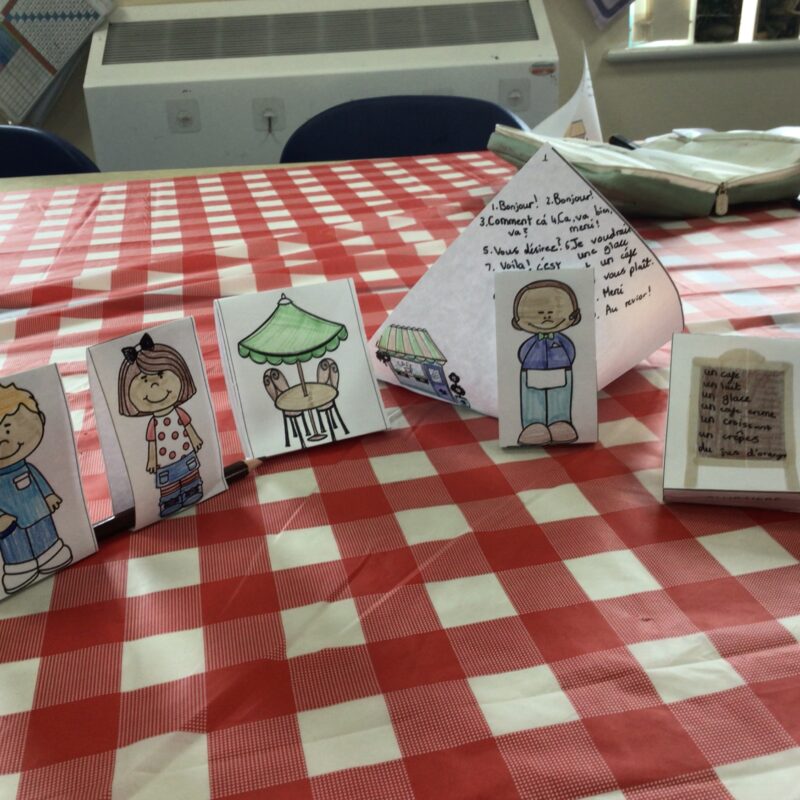
What does Languages look like at High Ercall?
As the UK is becoming an increasingly multicultural society, we have a duty to provide our children with an understanding of and knowledge about other cultures and languages. The languages provision at Key Stage 2 in High Ercall Primary School is designed to reflect this and also takes into consideration the primary languages entitlement as set out in the National Curriculum 2014.
The key elements of language learning at High Ercall are:
- Our language learning is inclusive and accessible for all to enable all the children to learn more and remember more.
- We will give our children a clear starting point for a school career in learning languages – to enable our children to continue their learning in French at our main feeder school – The Charlton Academy.
- It is taught as a coherent programme from year 3 to year 6 – building substantive knowledge to enable the children to speak, read and write in French by Year 6.
- The taught substantive knowledge is: phonics, key vocabulary and grammar. With clear sequencing and regular practice and retrieval, the children build their knowledge and understanding of the French language to meet the requirements of the National Curriculum.
- The children will build their disciplinary knowledge of languages and how they are structured to apply this learning to other language in later life
- The children learn and know about French life and culture.
One of our key drivers for our curriculum at High Ercall is diversity. It is important that we give all children the chance to learn a language to gain insights into their own lives and those of others around the world. They then can learn about people in other countries and cultures and reflect upon their own cultural identities and those of other people.
Curriculum Intent
We follow the National Curriculum expectations for Languages and expect that our pupils will have met or exceeded the expected standards for Year 6 Pupils.
The national curriculum for languages aims to ensure that all pupils:
- understand and respond to spoken and written language from a variety of authentic sources
- speak with increasing confidence, fluency and spontaneity, finding ways of communicating what they want to say, including through discussion and asking questions, and continually improving the accuracy of their pronunciation and intonation
- can write at varying length, for different purposes and audiences, using the variety of grammatical structures that they have learnt
- discover and develop an appreciation of a range of writing in the language studied
Implementation
A carefully sequenced curriculum
In our curriculum we have considered the journey of a child through the school, so that our curriculum is progressive, builds on prior learning, and regularly revisiting taught concepts. Each class has a two-year rolling programme which has been designed specifically to match the needs of our school and the structure of our classes, ensuring all children meet the full programme of study outlined in the National Curriculum.
How is the curriculum for Languages organised?
To ensure coverage, depth and balance in the curriculum, teachers plan in a variety of ways:
- Each class has a two-year long-term plan for teaching and learning in French. This includes details about taught substantive knowledge (vocabulary, grammar and phonics). The disciplinary knowledge about learning a language and about the wider cultural elements are explicit within the planning but also intrinsic in the teaching and learning and understanding.
- Across alternating half terms, each class will have one discrete lesson per week teaching French. There are also additional lessons looking at French culture and how languages support our learning. Classes also cover seasonal content such as learning about French national holidays or French Christmas traditions.
Planning is supported by:
- long-term curriculum plans
- medium-term plan
- knowledge organisers
- progression documents
- substantive concept maps
- disciplinary concept maps
- vocabulary progression
- carefully selected high-quality texts
- enhancement opportunities
Evidence-informed teaching
Evidence-informed teaching
Teaching reflects our whole-school Teaching and Learning Policy and is informed by current educational research, including guidance from the Education Endowment Foundation (EEF), the Department for Education (DfE) and Ofsted.
Teachers use a consistent evidence-informed approach, including:
- explicit teaching of new knowledge
- high-quality modelling
- carefully sequenced questioning
- retrieval practice
- regular review of prior learning
- vocabulary instruction
- opportunities for discussion and historical debate
- guided practice followed by independent application
- responsive teaching to address misconceptions.
Across school, staff use Teaching WalkThrus as part of our instructional coaching programme. This provides a shared language for effective teaching and supports consistency in classroom practice while allowing teachers to respond to the needs of individual learners.
Retrieval and Remembering
Children regularly revisit prior learning through:
- mind maps
- retrieval quizzes
- discussion
- vocabulary review
- songs
These approaches help children strengthen long-term memory and make links between concepts so that they know more and remember more.
Enrichment
French learning is enhanced through:
- educational visits;
- visitors and workshops;
- speaking and listening opportunities;
- themed celebration days;
- cross-curricular links where meaningful.
These experiences deepen understanding and provide memorable opportunities which support long-term learning.
Adaptive Teaching
We have high expectations for every learner.
All pupils access the same ambitious history curriculum through high-quality adaptive teaching.
Support may include:
- pre-teaching vocabulary;
- WIDGET symbols and visual supports;
- adapted recording methods;
- knowledge organisers;
- vocabulary walls;
- carefully selected resources;
- adult scaffolding;
- additional processing time;
- chunked instructions;
- opportunities for discussion before recording;
- assistive technology where appropriate.
These adaptations ensure every child can participate fully and succeed within the computing curriculum.
Impact
Impact
Children leave High Ercall with a secure understanding of French.
They are able to:
- listen attentively to spoken language and show understanding by joining in and responding
- explore the patterns and sounds of language through songs and rhymes and link the spelling, sound and meaning of words
- engage in conversations; ask and answer questions; express opinions and respond to those of others; seek clarification and help
- speak in sentences, using familiar vocabulary, phrases and basic language structures
- develop accurate pronunciation and intonation so that others understand when they are reading aloud or using familiar words and phrases
- present ideas and information orally to a range of audiences
- read carefully and show understanding of words, phrases and simple writing
- appreciate stories, songs, poems and rhymes in the language
- broaden their vocabulary and develop their ability to understand new words that are introduced into familiar written material, including through using a dictionary
- write phrases from memory, and adapt these to create new sentences, to express ideas clearly
- describe people, places, things and actions orally and in writing
- understand basic grammar appropriate to the language being studied, including (where relevant): feminine, masculine and neuter forms and the conjugation of high-frequency verbs; key features and patterns of the language; how to apply these, for instance, to build sentences; and how these differ from or are similar to English.
Our curriculum develops children who are curious, reflective and resilient learners, ready for the next stage of their education.
Impact is evaluated through:
- ongoing formative assessment;
- retrieval practice;
- pupil discussion;
- book scrutiny;
- lesson visits;
- assessment of substantive and disciplinary knowledge;
- subject leader monitoring;
- governor monitoring;
- pupil and parent voice.
Assessment information is used to identify strengths, address misconceptions and continually improve the quality of teaching and learning.