

Come and meet us
Science and Technology
Learning through curiosity, creativity and application
Our science and technology curriculum brings together knowledge and practical application. Children learn important facts, concepts and vocabulary, but they also learn how to use that knowledge: asking questions, gathering evidence, solving problems, creating digital content and designing products for a purpose.
Learning is carefully planned from the Early Years to Year 6 so that children revisit important ideas and build on what they already know. Clear progression documents, long-term plans and a two-year rolling curriculum support continuity within our mixed-age classes. Retrieval activities, mind maps, quizzes, discussion and practical tasks help children remember more and recognise the links between topics.
Science
Helping children explore the world with curiosity, knowledge and evidence.
Science is part of everyday life, and we want every child to enjoy discovering how the world works. Our curriculum develops secure knowledge across biology, chemistry and physics alongside the skills needed to work scientifically. Children learn to ask useful questions, choose appropriate ways to investigate, use equipment safely, collect and present data, interpret results and explain conclusions using evidence.
Science is taught for one afternoon each week. Year groups are taught separately for science so that knowledge and skills progress clearly, even when children otherwise learn in mixed-age classes. We use White Rose Science to support a challenging, well-sequenced curriculum with strong links to mathematics and clear expectations for scientific enquiry.
Lessons build on previous learning and introduce technical vocabulary directly. Children use discussion, vocabulary walls, mind maps and short quizzes to recall knowledge and address misconceptions. Practical investigations, outdoor learning, workshops, visits and visitors give pupils meaningful opportunities to apply their learning. Key Stage 2 pupils can also extend their interest through the after-school Science Club.
By the end of Year 6, children should meet or exceed the National Curriculum expectations. They should understand the scientific method, select suitable forms of enquiry and use their knowledge to investigate and explain the world around them. Above all, we want them to remain curious, respectful of our universe and ready for science at Key Stage 3.
View Science Curriculum
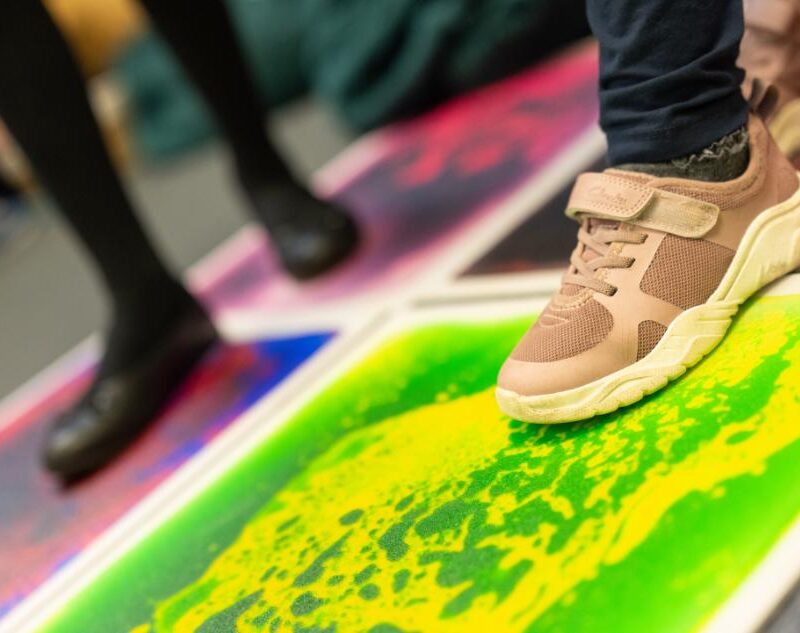
What does Science look like at High Ercall?
At High Ercall Primary School we recognise the importance of Science in every aspect of daily life and encourage children to be inquisitive throughout their time at school and beyond. We want children to develop an enthusiasm and enjoyment of scientific learning, and discovery, and to build upon their resilience and problem solving skills. We aim to ensure that children know and remember more through their development of substantive knowledge (facts, concepts and laws) and disciplinary knowledge (working scientifically). Substantive knowledge is revisited regularly through recaps during lesson starters, quizzes and the use of mind maps.
Our curriculum has been built to include our key curriculum drivers:
– our school values, the 5Rs
– the role of active learning
– building our children’s understanding of diversity.
In their time at High Ercall, we ensure that the children access the National Curriculum and have carefully considered the journey of a child through the school, so that our curriculum is progressive even when a child remains in a class for 2 years. We do this by splitting into year groups when teaching Science, rather than remaining in the normal mixed age classes.
The 2014 National Curriculum for Science aims to ensure that all children:
- develop scientific knowledge and conceptual understanding through the specific disciplines of biology, chemistry and physics
- develop understanding of the nature, processes and methods of science through different types of science enquiries that help them to answer scientific questions about the world around them
- are equipped with the scientific skills required to understand the uses and implications of science, today and for the future.
At High Ercall we believe that the transfer of skills from the other core subjects is important and necessary to the teaching of Science. The quality and variety of language that pupils hear and speak are key factors in developing their scientific vocabulary and articulating scientific concepts clearly and precisely. We ensure that pupils are assisted in making their thinking clear, both to themselves and others, and we build secure foundations by using discussion to probe and remedy their misconceptions. We feel that pupils should be able to describe processes and key characteristics in their own words, but they should also be familiar with, and use, technical terminology accurately. We enable them to build up an extended specialist vocabulary, which is supported through our use of ‘vocabulary mats or walls’ in classrooms for each topic area and Key Stage. Pupils are also taught, and are expected, to apply their mathematical knowledge to their understanding of science, including collecting, presenting and analysing data as part of working scientifically. These links with maths ensure that disciplinary knowledge is gained and maintained through regular rehearsal.
We ensure that the Working Scientifically skills are built-on and developed throughout children’s time at the school so that they can apply their knowledge of science when using equipment, conducting investigations, building arguments and explaining concepts confidently. This enables them to continue to ask questions and be curious about their surroundings.
What do we want children to be able to do by the end of Year 6?
We follow the National Curriculum expectations for Science and expect that our pupils will have met, or exceeded, the expected standards for Year 6 pupils. As the pupils progress through school we expect them to be able to understand the ‘Scientific Method’ for carrying out investigations and to be able to use different types of enquiry in order to answer questions. They should have acquired knowledge about the world around them and be able to ‘work scientifically’, using cross-curricular learning. They should be curious and respectful of our universe and ready for the transition to Key Stage 3.
How will this support the children in lifelong learning?
Science contributes towards many subjects, and it is important that children are given opportunities to apply and use their skills in real contexts. Where possible, cross curricular links are made in order to provide meaning and context to the teaching. This will allow the children to gain an understanding of how Science fits in to everyday life and make connections with the real world. The skills of reasoning, curiosity, investigation, mathematics and resilience developed through Science are those that will be used across all learning and into adulthood.
How is the curriculum for Science organised and how do we teach it?
Science is taught one afternoon per week and there is a clear progression map showing learning across all year groups and key stages. This details the topics covered, when and who by. There are also long-term plans, for each year group, detailing topic areas and when to teach them. The ‘White Rose Science’ scheme of work is used across school, ensuring a challenging curriculum offer with a clear development of skills and knowledge. It ensures close links with Mathematics skills, that are relevant to each year group, and sets out the ‘working scientifically’ expectations for all ages too.
Teachers create a positive attitude to Science learning within their classrooms and reinforce an expectation that all children are capable of achieving high standards. Our whole school approach to the teaching and learning of Science involves the following;
- Problem solving opportunities that allow children to find out for themselves. Children are encouraged to ask their own questions and be given opportunities to use their scientific skills and research to discover the answers. This curiosity is celebrated within the classroom. Teachers use precise questioning in class to test conceptual knowledge and skills, and assess children regularly to identify those with gaps in learning.
- We build upon the learning and skill development of the previous years. As the children’s knowledge and understanding increases, and they become more proficient in selecting, using scientific equipment, collating and interpreting results, they become increasingly confident in their growing ability to come to conclusions based on real evidence.
- Working Scientifically skills are embedded into lessons to ensure that they are developed throughout the children’s school career and new vocabulary and challenging concepts are introduced through direct teaching. This disciplinary knowledge is developed through the years, in-keeping with the topics that build upon previous learning.
- Teachers demonstrate how to use scientific equipment, and the various Working Scientifically skills, in order to embed scientific understanding. Teachers find opportunities to develop children’s understanding of their surroundings by accessing outdoor learning and workshops with experts where possible.
- Children are offered visits, trips and visitors to complement and broaden the curriculum. These are purposeful and link with the knowledge being taught in class. There is also an extra-curricular ‘Science Club’ once a week after school open to all pupils in Key Stage 2 which focusses on broadening knowledge and carrying out a range of fun investigations.
- Mind maps are used in all classes to determine prior knowledge at the start of a topic. A new map is then created and added to each week as the learning evolves. Children use this to recap what they have learnt so far and may take part in short quizzes at the start of a lesson to determine progress, understanding and raise any possible misconceptions. New vocabulary is revisited regularly and, in Key Stage 1, children use actions to help them to remember the meanings of new words. Vocabulary walls in classrooms display some of the key ‘new words’ that are relevant to each topic as it is covered.
- Scientific enquiry posters are displayed in class and used to develop the pupils’ understanding, together with miniature versions that are glued in books alongside any investigations that take place.
Children with SEND
Our children with any additional needs access the same high-quality teaching and learning in Science as their peers. Our curriculum is fully inclusive and supported by our well-trained staff. They may also be supported through an Individual Provision Map with additional adult support within a lesson, or a pre-teach or re-teach of new scientific vocabulary. This additionality, along with adaptive teaching of the curriculum, is planned to take into account individual needs. In Science this could mean that a child:
- is introduced to new vocabulary prior to a lesson, it is revisited afterwards and pictures/ actions are used to support understanding.
- is supported with writing/ recording their ideas by having a scribe or a different way of recording their information. This could be sentences to sequence, or match, rather than writing them or matching pictures to sentences.
- has more time or works 1:1 with an adult or in a smaller group.
- has support in using resources, such as thermometers or data loggers, in order to carry out investigations.
This is monitored by our SENDCO – Sarah Roberts – and parents are fully engaged and involved.
How do we review learning in Science?
Learning in Science is reviewed regularly by the subject leader who looks at books, talks to children or monitors planning. Following this, feedback is given to staff and any concerns discussed together in order to support individuals with their learning.
Both attainment and progress are informally monitored within lessons by observing and talking to children, using quizzes and fact retrieval questions and by creating mind maps to recall prior learning at the start of each new topic.
We also review the impact of our Science curriculum through:
- Marking and feedback according to our policy (mainly verbal feedback)
- Lesson observations and team-teaching sessions
- Moderation of learning across the staff team
- Governor review trails and feedback, including meetings with Subject Lead
- In class quizzes or assessments
A whole school review in May 2022 noted the following strengths in Science (after observing lessons, talking to children and looking in books):
- The newly developed enquiry cards that match to the ways of working in science enquiry posters are being used well, with pupils have a better understanding and articulation of the steps through an investigation.
- Pupils talked confidently about the learning in today’s lesson and all said that they enjoy science.
- They like investigations and all pupils were able to find an investigation in their books then talk about it confidently.
- They were clear about what they were learning in today’s lessons.
- Pupils understood how teachers found out they already knew at the beginning of a unit of work and that helps teachers to plan lessons.
- Pupils explained the different ways in which teacher find out what they remember e.g quizzes, going back to their mind map.
- Pupils could link their current learning to prior learning. For example, Class 4 were looking at life cycles and pupils recalled that they had previously learnt about the life cycle of a frog in Class 2.
The successful approach at High Ercall results in a fun, engaging, high-quality science education, that provides children with the foundations for understanding the world. Our engagement with the local environment, and planned outdoor learning activities, ensure that children learn through varied and first-hand experiences. Through various workshops, visits and interactions with experts, children have the understanding that science has changed our lives and that it is vital to the world’s future prosperity. Children at High Ercall discuss Science with enthusiasm and can explain their learning confidently and coherently.
Computing
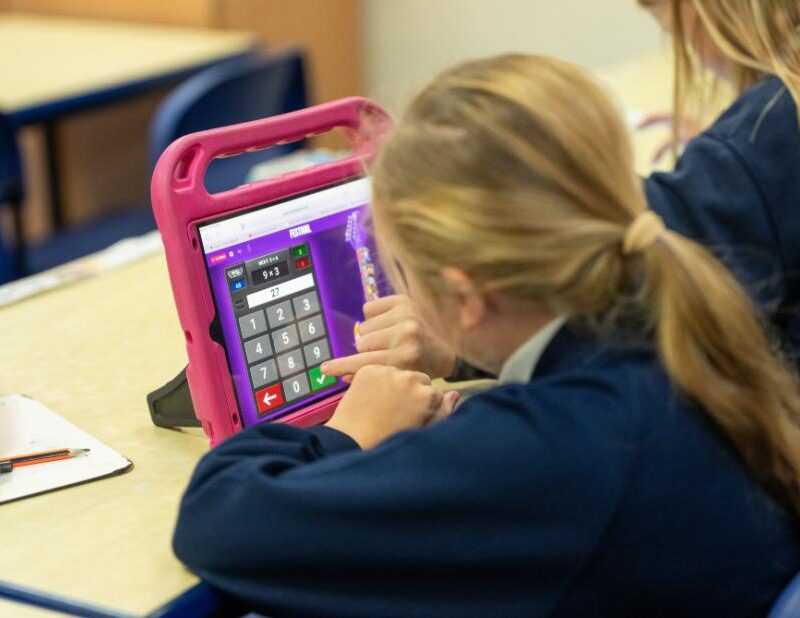

Building the knowledge and habits children need to use technology with purpose.
Computing prepares children to take an active role in a world shaped by technology. We want pupils to understand how digital systems work, develop computational thinking and use technology confidently, creatively and safely. The curriculum combines knowledge with regular practical application across three connected areas:
- Computer science: understanding systems, networks, algorithms and programming.
- Information technology: selecting and using digital tools to create, organise and communicate.
- Digital literacy: using technology responsibly, recognising risks and making safe choices online.
Across alternating half terms, children receive a discrete computing lesson each week, with further opportunities to use technology across subjects such as mathematics, science, design and technology and PSHE. Pupils work with age-appropriate devices and resources, including laptops, iPads, cameras, digital recorders, control devices and programmable technology.
Our two-year rolling programme revisits key concepts with increasing depth. Lessons include retrieval practice, explicit vocabulary teaching, demonstrations, discussion and purposeful tasks such as programming, blogging, handling data and creating digital media. Children learn that a program or piece of digital content is rarely perfect first time: testing, finding errors and improving their work are important parts of the process.
Online safety is taught throughout the curriculum rather than as a one-off topic. By the end of Year 6, children should meet or exceed the National Curriculum expectations across computer science, information technology and digital literacy. They should be able to apply their knowledge independently, behave responsibly online and make informed decisions when using technology.
View Computing Curriculum
What does Computing look like at High Ercall?
Through teaching computing at High Ercall Primary School, we equip our children with the substantive and disciplinary knowledge needed to participate in a rapidly changing world where work and leisure activities are increasingly transformed by technology.
Children will increase their substantive knowledge in computing by developing an understanding of how to safely use technology, how to be computational thinkers and how to program. This will support the development of disciplinary knowledge by allowing children to interpret and apply their substantive knowledge in the creation of original digital content. Computing skills are taught within context, using technology to both create and assist learning in all subject areas. We believe a high-quality computing education equips our pupils to use computational thinking and creativity to understand and change the world.
Our curriculum has been built to include our key curriculum drivers. The children are encouraged to develop our school values (the 5Rs) when studying computing, with a specific focus on resilience as children are encouraged to use a variety of technology throughout their journey at High Ercall.
Curriculum Intent
Our computing curriculum aims to ensure that all pupils:
- Can understand and apply the fundamental principles and concepts of computer science, including abstraction, logic, algorithms and data representation.
- Can analyse problems in computational terms and have repeated practical experience of writing computer programs in order to solve such problems.
- Can evaluate and apply information technology, including new or unfamiliar technologies, can think analytically to solve problems.
- Are responsible, competent, confident and creative users of information and communication technology.
Implementation
A carefully sequenced curriculum
In our curriculum we have considered the journey of a child through the school, so that our curriculum is progressive, builds on prior learning, and regularly revisiting taught concepts. Each class has a two-year rolling programme which has been designed specifically to match the needs of our school and the structure of our classes, ensuring all children meet the full programme of study outlined in the National Curriculum. Through a cross-curricular approach and diverse range of contexts, children become confident, independent and positive participants in the digital world. Children will understand and know how to use computers in an effective, informed and safe way.
We follow the National Curriculum expectations for computing and expect that our pupils will have met or exceeded the expected standards for Year 6 pupils. The computing curriculum is made up of three main strands, which are linked together and are of equal importance:
- Computer Science, the core of computing, in which pupils are taught the principles of information and computation, how digital systems work, and how to put this knowledge to use through programming.
- Information Technology is the application of skills. Pupils are equipped to use information technology to create programs, systems and a range of content.
- Digital Literacy ensures that pupils can use, and express themselves and develop their ideas through, information and communication technology, ready for the future workplace.
How is the curriculum for Computing organised?
To ensure coverage, depth and balance in the computing curriculum, teachers plan in a variety of ways:
- The KS1 and KS2 two-year rolling programme for long term planning contains details of particular units relevant to computing and when they should be taught
- Across alternating half terms, each class will have one discrete lesson per week teaching the fundamentals of computing.
- Further opportunities for use of technology will link to other areas of the curriculum and be encouraged as often as possible/relevant.
- Pupils have access to technology across the curriculum to enhance their learning and are encouraged to use these resources as and when they need them. This includes use of laptops, iPads, cameras and digital recording devices.
- The progression of skills document is used to inform teachers long-term planning to ensure coverage and a development of skills and knowledge across the three strands.
Planning is supported by:
- long-term curriculum plans
- medium-term plans
- knowledge organisers
- progression documents
- substantive concept maps
- disciplinary concept maps
- vocabulary progression
- carefully selected high-quality texts
- enhancement opportunities
Evidence-informed teaching
Teaching reflects our whole-school Teaching and Learning Policy and is informed by current educational research, including guidance from the Education Endowment Foundation (EEF), the Department for Education (DfE) and Ofsted.
Teachers use a consistent evidence-informed approach, including:
- explicit teaching of new knowledge
- high-quality modelling
- carefully sequenced questioning
- retrieval practice
- regular review of prior learning
- vocabulary instruction
- opportunities for discussion and historical debate
- guided practice followed by independent application
- responsive teaching to address misconceptions.
Across school, staff use Teaching WalkThrus as part of our instructional coaching programme. This provides a shared language for effective teaching and supports consistency in classroom practice while allowing teachers to respond to the needs of individual learners.
Retrieval and Remembering
Retrieval and remembering
Children regularly revisit prior learning through:
- mind maps
- retrieval quizzes
- discussion
- vocabulary review
These approaches help children strengthen long-term memory and make links between concepts so that they know more and remember more.
Enrichment
Computing learning is enhanced through:
- educational visits;
- visitors and workshops;
- speaking and listening opportunities;
- cross-curricular links where meaningful.
These experiences deepen understanding and provide memorable opportunities which support long-term learning.
Adaptive Teaching
We have high expectations for every learner.
All pupils access the same ambitious history curriculum through high-quality adaptive teaching.
Support may include:
- pre-teaching vocabulary;
- WIDGET symbols and visual supports;
- adapted recording methods;
- knowledge organisers;
- vocabulary walls;
- carefully selected resources;
- adult scaffolding;
- additional processing time;
- chunked instructions;
- opportunities for discussion before recording;
- assistive technology where appropriate.
These adaptations ensure every child can participate fully and succeed within the computing curriculum.
Impact
Children leave High Ercall with a secure understanding of computing and online safety.
They are able to:
- design, write and debug programs that accomplish specific goals, including controlling or simulating physical systems; solve problems by decomposing them into smaller parts
- use sequence, selection, and repetition in programs; work with variables and various forms of input and output
- use logical reasoning to explain how some simple algorithms work and to detect and correct errors in algorithms and programs
- understand computer networks including the internet; how they can provide multiple services, such as the world wide web; and the opportunities they offer for communication and collaboration
- use search technologies effectively, appreciate how results are selected and ranked, and be discerning in evaluating digital content
- select, use and combine a variety of software (including internet services) on a range of digital devices to design and create a range of programs, systems and content that accomplish given goals, including collecting, analysing, evaluating and presenting data and information
- use technology safely, respectfully and responsibly; recognise acceptable/unacceptable behaviour; identify a range of ways to report concerns about content and contact.
Our curriculum develops children who are curious, reflective and resilient learners, ready for the next stage of their education.
Impact is evaluated through:
- ongoing formative assessment;
- retrieval practice;
- pupil discussion;
- book scrutiny;
- lesson visits;
- assessment of substantive and disciplinary knowledge;
- subject leader monitoring;
- governor monitoring;
- pupil and parent voice.
Assessment information is used to identify strengths, address misconceptions and continually improve the quality of teaching and learning.
Design and Technology
Giving children the confidence to develop ideas and create practical solutions.
Design and technology encourages children to think creatively and solve real problems. Pupils consider the needs of others, develop their own ideas and make products with a clear purpose. They learn that successful design is an ongoing process of research, planning, making, testing, evaluating and improving.
Every year group completes at least one design and technology topic each term, including one food and nutrition project. Our curriculum follows a two-year cycle and uses the Design and Technology Association’s Projects on a Page to support progression in knowledge and practical skills. Learning makes purposeful links with mathematics, science, computing and art wherever these strengthen the project.
Children explore materials, structures, mechanisms, textiles, electrical systems and food. They learn to select and use tools safely, create and communicate designs, build prototypes and judge how well a finished product meets its purpose. Food projects develop an understanding of nutrition, hygiene, cooking and seasonality, while Key Stage 2 pupils also explore how computing can be used to monitor and control products.
By the end of Year 6, children should have the knowledge and confidence to design, make, test and evaluate products independently. We want them to be resourceful and willing to take considered risks, respond positively when an idea needs to change and understand how designers and technological innovation shape everyday life.
View Design & Technology Curriculum

What does Design and Technology look like at High Ercall?
At High Ercall Primary School, Design and Technology gives pupils the knowledge, practical capability and confidence to solve real problems for real users. Children learn that successful design is purposeful: designers investigate needs, draw on technical knowledge, generate and communicate ideas, make carefully, test, evaluate and improve.
Our ambitious curriculum is carefully sequenced from EYFS to Year 6 so that pupils know more, remember more and can increasingly apply their learning independently. It develops substantive knowledge of materials, structures, mechanisms, electrical systems, textiles, food, tools, processes, products and designers, alongside disciplinary knowledge of how designers research, make decisions, prototype, test, evaluate and iterate.
The curriculum promotes the school’s 5Rs. DT particularly develops resilience when prototypes do not work first time, responsibility through safe practical work, reflection through evaluation, respect through designing for others, and resourcefulness through problem-solving and material choice.
Curriculum Intent
- provide a broad, balanced, ambitious and inclusive DT entitlement for every pupil;
- meet the National Curriculum requirements for designing, making, evaluating, technical knowledge and cooking and nutrition;
- develop secure practical and technical knowledge through explicit teaching, modelling, rehearsal and repeated application;
- teach pupils to design for a clear user, purpose and context rather than simply complete craft activities;
- develop iterative design thinking: investigate, generate, model, make, test, evaluate, refine and improve;
- build precise technical vocabulary and confident explanation of design choices;
- teach pupils to learn from existing products and from designers, engineers, inventors, manufacturers and chefs;
- develop safe, accurate and increasingly independent use of tools, equipment, materials, components and ingredients;
- connect DT meaningfully with mathematics, science, computing, engineering and art while retaining DT’s distinctive disciplinary purpose;
- prepare pupils for Key Stage 3, everyday life and participation in a technological world.
A carefully sequenced curriculum
DT is organised through a two-year rolling programme designed for the school’s mixed-age classes. The long-term plan secures National Curriculum coverage and progression and is supported by progression, vocabulary, book and enhancement documents. Important knowledge is deliberately revisited so that later units can build on earlier learning rather than starting again.
- long-term curriculum plans;
- unit/medium-term planning;
- progression of skills and technical knowledge;
- vocabulary progression;
- DT and engineering book lists;
- local enhancement opportunities;
- assessment mind maps and retrieval walls.
Evidence-Informed Teaching
Teaching reflects evidence about how pupils acquire and retain complex knowledge and practical skills. Teachers use explicit instruction when introducing unfamiliar tools, processes and technical concepts, followed by guided practice and increasing independence. EEF guidance also informs the use of scaffolding and metacognitive strategies so pupils learn to plan, monitor and evaluate their own work.
- activate prior knowledge and make links to previous units;
- teach technical concepts and vocabulary explicitly;
- model techniques, safe routines and design thinking through demonstrations and think-alouds;
- break complex making processes into manageable components;
- use examples and non-examples to sharpen understanding of quality and function;
- give pupils opportunities to practise component skills before combining them in a product;
- check understanding frequently and give timely feedback while pupils are designing and making;
- gradually reduce scaffolds so pupils take increasing responsibility for decisions;
- use purposeful prototypes, tests and evaluations to drive improvement.
Designing for purpose and users
Units are framed by meaningful design contexts. Pupils learn to identify who a product is for, what it needs to do and which criteria will determine success. At Key Stage 2, research and increasingly precise design criteria inform decision-making. Pupils communicate ideas in age-appropriate ways including talk, drawings, templates, mock-ups, annotated sketches, diagrams, prototypes, pattern pieces and CAD where relevant.
Technical knowledge and making
Teachers explicitly teach the knowledge pupils need to make successful decisions: material and ingredient properties; cutting, shaping, joining and finishing; structures and reinforcement; mechanisms and mechanical systems; electrical systems; and computing/control where planned. Practical accuracy, safety and independence develop progressively across school.
Evaluation and iteration
Pupils investigate and analyse existing products and evaluate their own ideas and outcomes against design criteria and user needs. Evaluation is not an end-of-unit writing exercise: it is used throughout the process to decide what to retain, change, test or improve. Pupils learn that unsuccessful prototypes provide useful information.
Cooking and nutrition
Food units combine practical cooking with knowledge of healthy and varied diets, food provenance, seasonality and ingredients. Pupils progressively develop preparation and cooking techniques and make informed choices about nutrition, taste, texture, appearance, cost and sustainability. Key Stage 2 pupils prepare and cook a variety of predominantly savoury dishes.
Retrieval, remembering and assessment
The principal assessment change from September 2026 is a consistent mind-map and retrieval approach, aligned with the successful model used in other foundation subjects but adapted to the distinctive nature of Art and Design.
- At the start of each unit, the class creates a shared mind map.
- The mind map has four branches: Design/Evaluate; Making Skills/Technical Knowledge; Designers/Inventors/Existing Products; and Vocabulary.
- As new learning is taught, teachers and pupils add the essential knowledge all pupils are expected to remember.
- A small number of cumulative retrieval questions are created from this knowledge and displayed on a DT Retrieval Wall.
- Questions are revisited through brief, low-stakes oral or written retrieval during the unit and through spaced retrieval later in the year.
- Retrieval is targeted at suitable knowledge such as vocabulary, material properties, component functions, mechanisms, safety, food knowledge, designers and technical processes.
- Practical competence is assessed through observation of pupils using tools, processes and techniques, not through quizzes.
- Design reasoning is assessed through pupils’ explanations, designs, prototypes, decisions, testing and purposeful improvements.
- Finished products contribute to assessment but are never the sole evidence of attainment.
Teachers triangulate evidence from mind maps, retrieval, discussion, design records, observation, prototypes, products and pupil voice. Assessment identifies what needs reteaching or further practice. This reflects Ofsted’s current emphasis on assessment that checks understanding and informs cha
Early Years
Reception pupils develop foundations through Expressive Arts and Design, Physical Development and Understanding the World. Through construction, joining, tool use, food experiences and problem-solving, children learn to select resources, develop ideas, adapt what they make and talk about how things work. Adults model vocabulary and safe practical routines while providing rich opportunities for exploration and child-initiated design.
Adaptive teaching and inclusion
We have high expectations for every learner. Pupils access the same ambitious curriculum wherever possible, with barriers removed through responsive adaptations.
- pre-teaching technical vocabulary;
- clear modelling and small-step instruction;
- additional guided practice and repetition;
- visual sequences, WIDGET symbols, checklists, templates and jigs where helpful;
- adapted tools, grips, work surfaces or materials;
- additional processing time and chunked instructions;
- flexible grouping and carefully deployed adult support;
- assistive technology or alternative recording methods where appropriate;
- scaffolds that are deliberately faded as independence grows.
Enrichment and careers
Learning is enriched through educational visits, local industry, workshops and visitors. The school’s enhancement plan draws on Shrewsbury, Telford, Ironbridge and the wider Shropshire area to connect curriculum learning with engineering, manufacturing, construction, textiles, food, electronics, architecture and product design. Encounters are chosen because they deepen the planned curriculum and raise awareness of future pathways and careers.
Impact
By the end of Year 6, we want pupils to be able to:
- recall and apply increasingly secure technical and practical knowledge;
- identify users and purposes and develop appropriate design criteria;
- research and learn from existing products and significant designers, engineers and inventors;
- generate, communicate and model ideas in increasingly sophisticated ways;
- select and use tools, equipment, materials, components and ingredients accurately and safely;
- apply knowledge of structures, mechanical systems, electrical systems and computing/control where relevant;
- prepare and cook food with increasing confidence and understand nutrition, seasonality and provenance;
- test products and prototypes systematically and use findings to improve them;
- evaluate against design criteria and explain design decisions using precise vocabulary;
- plan, monitor and evaluate their own design process with increasing independence;
- approach practical problems with resilience, creativity and resourcefulness.
Impact is evaluated through:
- ongoing formative assessment and responsive teaching;
- mind maps and retrieval-wall responses;
- pupil discussion and pupil voice;
- observation of practical work, safety, accuracy and independence;
- design records, models, prototypes and finished products;
- lesson visits and professional dialogue;
- review of curriculum coverage and progression;
- subject leader and governor monitoring;
- consideration of participation, access and outcomes for pupils with SEND, disadvantaged pupils and other groups.
Progress is understood as pupils learning and remembering more of the planned DT curriculum and becoming increasingly able to select, combine and apply that knowledge independently to solve design problems. The school does not equate progress with the quantity of written work or the attractiveness of a final product.
Supporting every child to succeed
All pupils, including children with special educational needs and disabilities, have access to the same ambitious science and technology curriculum. Teachers use adaptive teaching and well-planned support to remove barriers without reducing the value of the learning.
Support may include introducing vocabulary before a lesson, revisiting new language with words, pictures or actions, breaking instructions into smaller steps, allowing more time, using a smaller group or providing additional adult guidance. Children may use adapted resources or different ways to record their ideas, and they receive appropriate support when using scientific equipment, digital tools and practical DT resources.
Teachers assess learning through questioning, discussion, quizzes, mind maps, observation and the work children produce. Subject leaders also use pupil conversations, work scrutiny and lesson visits to monitor how well knowledge and skills are developing across the school.