

Come and meet us
Writing, Speaking and Listening
Helping children find their voice, shape their ideas and communicate with confidence.
Children learn to communicate by listening closely, speaking with purpose, reading as writers and practising the craft of writing. We teach these skills explicitly and give pupils regular opportunities to use them across the curriculum for real audiences and purposes.
Vocabulary and grammar connect spoken and written language. Through stories, discussion, drama, model texts and carefully sequenced teaching, children learn to organise ideas, choose precise language and improve their work.
Writing with purpose
Writing develops through two connected strands: transcription—handwriting and spelling—and composition—planning, drafting, shaping and improving ideas. Children write fiction, non-fiction and poetry and apply their skills in subjects across the curriculum.
Teachers use high-quality texts and clear models to make successful writing visible. Pupils rehearse sentences, explore vocabulary and grammar, plan the structure of a piece, draft with increasing independence and edit for meaning, accuracy and effect.
View Writing Curriculum

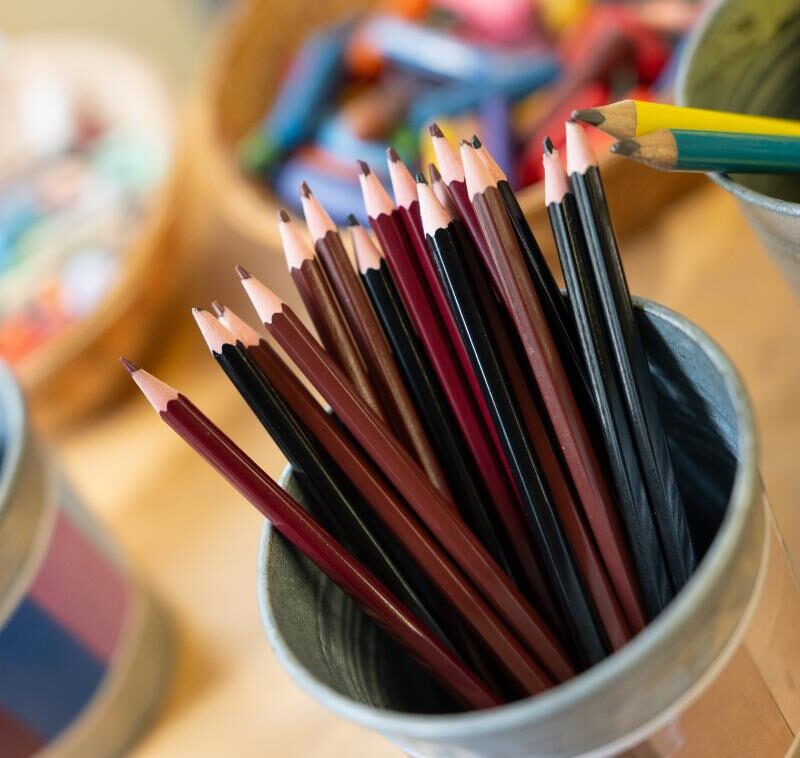
Early writing, spelling and handwriting
In the Early Years, purposeful mark-making, drawing, phonics and oral storytelling build the foundations for writing. Children learn correct letter formation when they are ready, then develop a fluent cursive style from Year 1 to Year 6 using Letter-join.
Spelling teaching links phonics, word structure, patterns and common exceptions. Children practise words in context and learn strategies that help them check and correct their own writing.
View Writing Curriculum
Speaking and listening
The ability to speak clearly and listen thoughtfully supports learning in every subject. Children learn to choose an appropriate register, use Standard English when required, build on other people’s ideas, ask and answer questions, explain their reasoning and present to different audiences.
Opportunities include discussion and debate, Talk for Writing, retelling stories and poems, role play, performances, responding to visitors and using the conventions of subject-specific talk in history, science, PSHE and other lessons.
View Speaking & Listening Curriculum

Drama, performance and cultural experience
Drama helps pupils experiment with language, perspective and emotion before committing ideas to writing. Children work in role, improvise, rehearse and evaluate performance. Theatre visits and school productions also allow them to experience and respond to live performance.
View Writing Curriculum
Supporting Progress
Teachers assess communication continuously through conversation, observation and pupils’ written work. Support may include pre-teaching vocabulary, visual prompts, oral rehearsal, quieter spaces, additional time, adapted recording and advice from Speech and Language Therapy or Sensory Inclusion services.
Curriculum Documents
Writing Progression EYFS & KS1
Curriculum Statement for Writing 2026
Long Term Plans
Writing EYFS Long term planning
Writing Y1 Long term planning 2026
Writing Y2 Long term planning 2026
Writing Y3 Long term planning 2026
Writing Y4 Long term planning 2026
Writing Y5 Long term planning 2026
Writing Y6 Long term planning 2026