
Come and meet us
Early Years Curriculum
A happy, secure start where play, relationships and purposeful teaching help every child flourish.
In Early Years at High Ercall, we nurture happy, healthy and confident children in a safe, engaging environment. We focus on learning through a balance of adult -led and child imitated play-based curriculum that sparks curiosity and a love of learning. Every child is valued as an individual, and through strong relationships, high expectations and our 5Rs values of Respect, Resilience, Responsibility, Reflection and Resourcefulness, we help children grow into independent, capable learners who are ready to flourish
Explore Early Years
- The Seven Areas Of Learning
- How Children Learn
- Early Reading, Writing & Mathematics
- Observation, Assessment & Partnership
- Preparing For Reception
The Early Years Foundation Stage is organised into three prime and four specific areas. They connect throughout the day in provision along with teacher input sessions.
Prime Areas
- Communication and Language.
- Personal, Social and Emotional Development.
- Physical Development.
Specific Areas
- Literacy.
- Mathematics.
- Understanding the World.
- Expressive Arts and Design.
The characteristics of effective learning (playing and exploring, active learning, and creating and thinking critically) describe how children approach experiences. Adults notice these behaviours, extend language and thinking, and help children persevere when something is difficult.
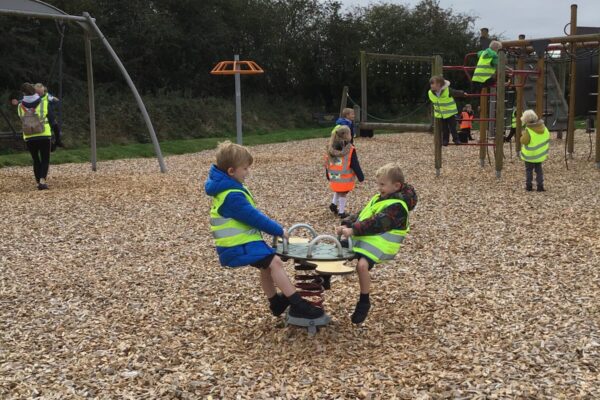
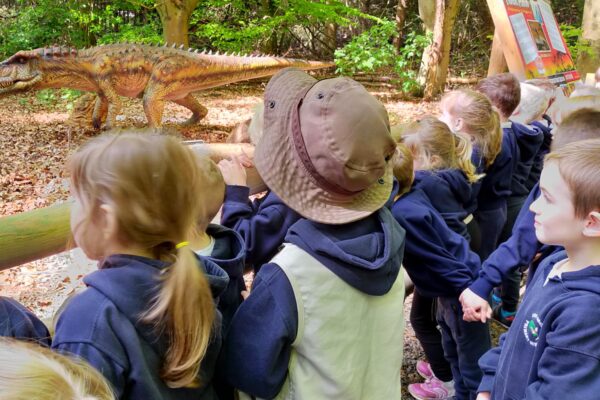
The day includes child-led play, adult-led teaching, directed tasks and responsive interactions. Children move between indoor and outdoor provision and revisit ideas through stories, conversation, investigation, construction, movement and imaginative play.
Daily Phonics through Active Learn sessions build knowledge of sounds and letters, blending and early spelling. Carefully matched books give children a successful start to independent reading, while stories, songs and conversation develop vocabulary and comprehension.
Mark-making, drawing, oral rehearsal, dictated sentences and modelled purposeful writing help children communicate ideas.
Mathematics grows through counting, comparison, pattern, shape, measure and spatial thinking, supported by Number Sense and White Rose opportunities.
Staff observe children during everyday learning, talk with them and use what they notice to plan appropriate teaching progression, provision and enhancements. The Reception Baseline Assessment provides an early national measure, and the 17 Early Learning Goals support the end-of-year assessment.
Conversation remains central: parents and carers are encouraged to speak to the team, share relevant information and celebrate progress together.
Transition visits and stay-and-play sessions help children become familiar with the people, spaces and routines they will meet.
Families can support readiness through conversation, stories, independent dressing and toileting, sharing meals, learning nursery rhymes, active play and practising short separations—without turning the summer into formal lessons.